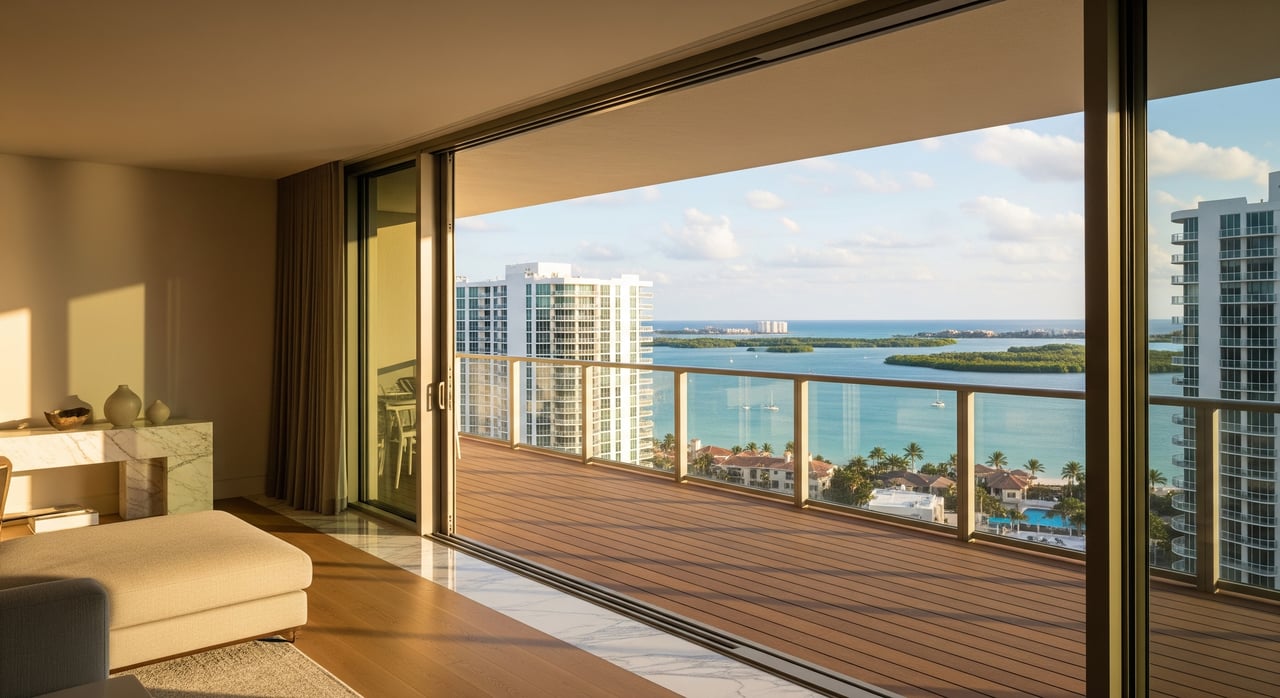
Shopping Pelican Bay high-rises is exciting, but comparing stacks and views can feel overwhelming. You want the right Gulf sightline, comfortable sun exposure, easy beach access, and a solid association behind it all. This guide breaks down exactly how to evaluate stacks, verify view quality, and confirm key risks and benefits before you commit. Let’s dive in.
Know your stack
A stack is the vertical line of similar units that repeat up the tower. Identical stack positions often share the same view corridor, sun exposure, and resale pattern across floors.
Request these items early:
- Building stack map or unit stacking plan.
- Typical floor plan and balcony footprint for the stack.
- The unit’s compass orientation and whether it is a corner or interior.
How to read them:
- Confirm which side the stack faces, such as west to the Gulf, southwest, or north. Corner stacks can offer wider angles, while mid-stacks may have narrower corridors.
- Pull recent sales in the same stack to gauge the value difference by floor. Same-stack comparables are your best valuation guide.
- Note elevator service patterns. Stacks near independent elevator banks can experience different traffic and noise.
Analyze the view corridor
Not all “water views” are equal. Your goal is to confirm both quality and permanence.
What to look for on site:
- Stand 10 to 15 feet back from the balcony edge to simulate daily vantage points.
- Visit morning, midday, and late afternoon to judge glare, brightness, and privacy from neighboring buildings.
- Photograph the view each time for true side-by-side comparisons.
Evaluate corridor type and risk:
- Identify whether the view is a wide, unobstructed Gulf panorama, a narrow peek between buildings, bay or inlet water, mangrove and green, interior courtyard, or mostly city and parking.
- Consider permanence. A narrow “slice” of water between buildings can disappear if adjacent parcels develop. Check zoning, parcel ownership, and any pending permits using Collier County property and planning resources.
- Note vegetation. Mature trees enhance privacy but can block lower-floor views and will grow over time.
Sun exposure and comfort
Orientation drives how bright and warm a unit feels, especially on balconies.
Rules of thumb for Naples latitude:
- West-facing balconies receive strong afternoon sun, which can raise interior temperatures and A/C usage.
- East-facing balconies capture morning sun and tend to stay cooler later in the day.
- South-facing units get significant sun for much of the day. North-facing units receive predominantly indirect light and typically feel cooler.
How to quantify:
- Use tools like the NOAA Solar Calculator or SunCalc to plot sun azimuth and elevation for specific dates and times at the unit’s location.
- Factor balcony depth and overhead cover. Deeper overhangs can block high summer sun, while shallow balconies admit more direct light.
- During afternoon visits, touch railings and flooring to gauge heat and ask for typical utility bills for comparable stacks.
Beach access and walkability
In Pelican Bay, the route matters as much as distance. The private community beach amenities are a major lifestyle benefit, but access points and boardwalks vary.
What to verify:
- Confirm your building’s documented membership and access rights with the Pelican Bay Community Association and the condominium’s governing documents.
- Walk the actual route to the closest beach access. Time it and note shade, stairs, gates, badge requirements, and the return trek with gear.
- Ask about guest policies and any parking limitations related to beach facilities.
HOA health and insurance exposure
Association finances and insurance can change your monthly cost and your risk profile.
Request these documents before you write or as contingencies:
- Condominium Declaration, Bylaws, and Rules and Regulations.
- Current budget, year-to-date financials, and the latest reserve study.
- Recent meeting minutes showing capital plans or special assessments.
- Master insurance policy declarations that outline wind, flood, and deductibles, plus what is unit owner responsibility.
- Estoppel letter to verify assessment status and any pending special assessments.
- Maintenance history for façade, windows, roof, and elevators.
Key risk checks:
- Determine the building’s FEMA flood zone using the Flood Map Service Center and request any elevation certificates.
- Ask whether windows and doors are impact rated or if shutters are in place. Confirm if upgrades were part of a recent capital project.
- Understand wind and flood deductibles, which can be percentage based. Work with your insurance broker to estimate realistic premiums for the specific stack and unit.
Storm performance and logistics
Hurricanes shape how you evaluate a high-rise in Naples.
Questions to ask management:
- Flood exposure by floor, historic claims if known, and official guidance for sheltering or evacuation.
- Building envelope upgrades, like impact glass, roof systems, and structural tie-down improvements.
- Generator capacity and elevator service during power outages, plus fuel plans for extended events.
Field checklist for showings
Visit more than once and bring a simple checklist to keep comparisons objective.
On every visit:
- Photograph views from the balcony and main windows morning, midday, and late afternoon.
- Walk the route to the nearest Pelican Bay beach access and time the trip.
- Listen for mechanical rooms, traffic, and crowd noise. Note privacy and sight lines from neighboring balconies.
- Measure balcony depth and assess shading from overhangs.
- Check elevator proximity, wait times, parking assignment, storage cage location, and entry security.
Build your comparison matrix
Create a side-by-side list for each candidate unit. Include:
- Stack ID and floor number
- Compass orientation
- View type, such as full Gulf, partial Gulf, bay, mangrove, courtyard, or obstructed
- Obstruction risk, including adjacent vacant parcels or protected preserves
- Sun exposure in morning and afternoon
- Walk time to the nearest Pelican Bay beach access
- HOA monthly fee and any recent special assessments
- Insurance notes for wind and flood
- Price per square foot from recent same-stack sales
- Rental and pet rules that may affect future demand
Offer strategy and contingencies
Lean on data from the same stack to value view and floor premiums. The best comps are closed sales in the identical stack and similar floors.
When you write, include contingencies for document review and verification. That should cover HOA financials, reserve studies, meeting minutes, and association insurance declarations, along with an estoppel letter. Consider consulting a condo-savvy attorney and confirming insurance quotes before your inspection periods expire.
The bottom line for Pelican Bay
The right Pelican Bay high-rise choice balances view quality, sun comfort, beach access, and association strength. When you assemble stack maps, verify view permanence, walk the beach route, and review HOA and insurance details, you give yourself clarity and negotiating power.
If you want a discreet, data-driven partner for this process, connect with Maureen Sexson for tailored guidance, same-stack market insights, and white-glove buyer representation.
FAQs
How do Pelican Bay stacks affect value?
- Units in the same stack tend to share view corridors and sun patterns, so recent sales in that stack are the best guide to value differences by floor.
What counts as a true Gulf view in 34108?
- A wide, unobstructed horizon to the Gulf typically commands a premium over narrow peek views, bay or inlet water, mangroves, or interior courtyard outlooks.
How can I check if my view might be blocked?
- Review Collier County zoning and parcel maps for adjacent height allowances and search permit records for pending projects. Ask the HOA about known development plans.
Which orientation is best for comfort?
- East-facing units are cooler in the afternoon, west-facing capture sunsets but are hotter later in the day, and north-facing receive softer, indirect light. Use sun path tools to confirm for your dates.
What HOA and insurance red flags should I watch for?
- Thin reserves, repeated or large special assessments, active litigation, or gaps in association insurance. Review minutes, reserve studies, and policy declarations closely.
How should I evaluate beach access convenience?
- Confirm your building’s access rights, then time the actual walking route to the nearest Pelican Bay access, noting shade, stairs, gates, and any badge or guest rules.