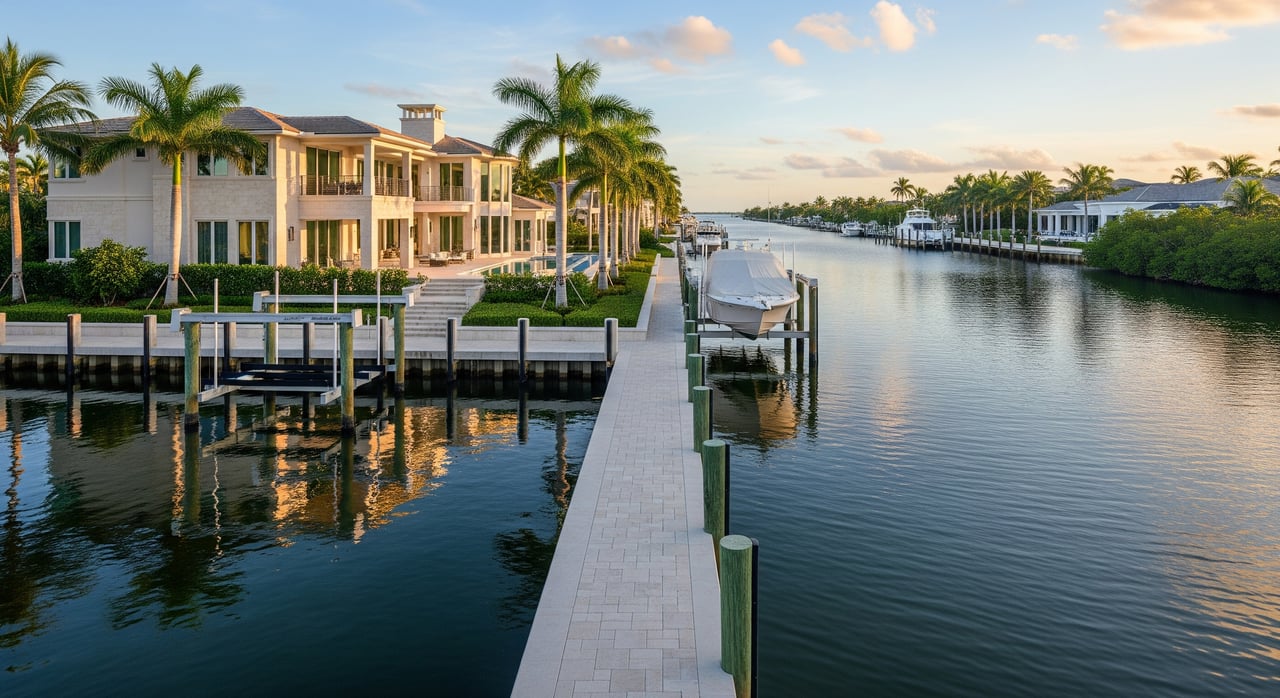
Two Aqualane Shores lots can look identical on a map yet sell for very different prices. If you are eyeing the canals of 34102, you already know the water is the star. The real question is how the lot’s position on that water and the dock infrastructure behind the home shape value, usability, and long-term ownership costs. In this guide, you will learn the key factors that matter most for buying or selling on the water in Aqualane Shores and nearby Port Royal, plus practical steps to verify them with confidence. Let’s dive in.
Aqualane vs. Port Royal context
Aqualane Shores offers intimate, canal-oriented living with smaller lot footprints and individual docks. It attracts buyers who want quick access to Naples Bay with a neighborhood feel. Nearby Port Royal is a trophy enclave with large estates, deep-water frontage, and infrastructure that can support larger yachts.
In both areas, premiums are tied to usable water frontage, depth and access to deep water, dock capacity, and neighborhood reputation. When you compare homes, focus on the water first, then the house. Lot orientation and dockage can drive six-figure differences in marketability.
What lot orientation really means
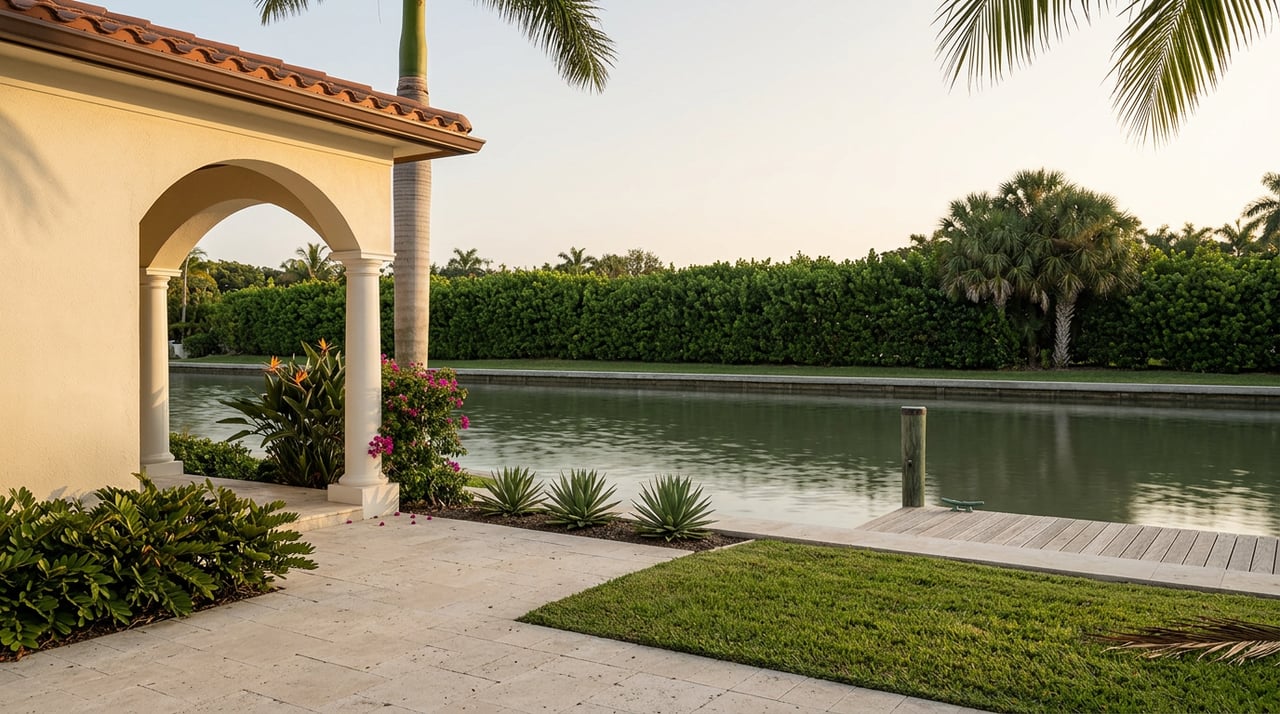
Lot orientation is more than which way the home faces. In Aqualane Shores, it describes how your seawall meets the canal, what you see when you look across the water, and how easily you can maneuver a boat.
- Waterfront frontage. Linear feet at the seawall is a primary value driver. More usable frontage typically supports larger or multiple slips. You can verify recorded dimensions with the Collier County Property Appraiser.
- Canal geometry. Lots that open toward a main basin or wider water often command a premium over tight bends or shallow spurs. Wider canals allow longer docks, easier turning, and less risk of neighbor conflict.
- Solar exposure and privacy. East or west exposure affects afternoon sun on your pool and dock. The angle to neighboring docks influences privacy and noise. Some buyers prefer sunrise light with softer afternoons on the water.
- Lot width, depth, and shape. Narrow or tapered parcels can limit dock design even if recorded frontage looks generous. Deeper lots provide flexibility to site the home and outdoor living without encroaching on waterfront setbacks.
Dockage features that move the needle
Dock infrastructure can be the most valuable improvement on a waterfront lot. Appraisers and buyers look closely at condition, capacity, and expected life.
- Seawall condition. The seawall is often the costliest component to repair or replace. Documented recent work and warranties tend to support stronger pricing. Older seawalls can trigger buyer discounts to hedge near-term replacement risk.
- Dock design and size. Overall length, slip width, finger piers, piling type, and materials all matter. Concrete or steel pilings are typically viewed as longer-lived than untreated wood. Built-in lighting and safe, well-placed cleats add utility.
- Lifts and davits. Lift capacity must match the intended vessel. Buyers with larger boats will pay more for lifts that can comfortably handle beam and weight.
- Utilities at the dock. Shore power, breaker configuration and amperage, plus potable water at the pier increase convenience and perceived value.
- Maintenance records. Clean documentation of inspections, repairs, and contractor warranties reduces uncertainty for buyers and supports higher offers.
Turning basins and channel access
A turning basin is a widened area of a canal or bay that allows boats to maneuver. In Aqualane Shores, proximity to a basin or to a main channel can be a major plus, especially for larger vessels.
- Benefits. Easier turning, quicker access to Naples Bay and the Gulf, and lower perceived risk for high-value vessels. For some boaters, this translates into stronger demand and premium pricing.
- Trade-offs. Basins can concentrate wakes and boat noise. That may increase dock wear and maintenance. The right choice depends on how you plan to use the water and your comfort with activity nearby.
Before you finalize a decision, confirm usable depth, local channel maintenance, and any bridge or vertical clearance considerations with official resources and local authorities.
Flood, permits, and environmental rules
Waterfront value is tied to risk and regulations. A smart due-diligence process checks flood zones, permits, and environmental constraints early.
- Flood zones. Every waterfront property in 34102 sits within FEMA flood designations that affect insurance and building standards. Check your property’s map at the FEMA Flood Map Service Center.
- Dock and seawall permits. Construction and major modifications are regulated under the Florida Building Code and local rules. Start with Collier County permitting and the Florida Department of Environmental Protection for state-level requirements. Federal review by the U.S. Army Corps of Engineers can apply to certain structures and areas.
- Environmental protections. Seagrass beds, mangroves, and protected species areas shape what you can build and where. Restrictions may affect lift types, piling installation, and dredging.
- Long-term resilience. Sea-level rise can influence flood and maintenance risk over time. Review local projections with NOAA’s Sea Level Rise Viewer and plan improvements with resilience in mind.
How appraisers price waterfront
Valuation in Aqualane Shores and Port Royal often starts with price per linear foot of usable waterfront, then adjusts for depth, dock condition, and access to deep water or a turning basin. Replacement cost matters too. If a seawall is near end of life, expect buyers to factor that into offers.
Appraisers favor comparable sales with similar frontage, canal width, dock capacity, and navigational access. MLS and Naples Area Board of REALTORS data shape these adjustments, while statewide market context is often sourced from Florida Realtors.
Buyer due-diligence checklist
Use this list to verify the water side before you write an offer.
- Recorded waterfront footage, setbacks, and easements. Pull the deed, plat, and confirm with the Collier County Property Appraiser.
- Seawall and dock documentation. Obtain permits, as-built drawings, maintenance records, and warranties.
- Structural inspections. Order a professional seawall and dock inspection. If you have a specific vessel in mind, add a marine survey.
- Depth and access. Confirm mean low water and channel depth measurements. Ask about dredging history and who maintains the canal.
- Environmental constraints. Check for seagrass, mangroves, and protected areas with the FDEP and local permitting resources.
- Flood and insurance. Pull a flood zone determination from FEMA and request preliminary quotes for homeowners and flood insurance.
Seller preparation tips
If you are listing a waterfront property, reduce uncertainty and highlight strengths up front.
- Gather records. Permits, as-builts, inspection reports, and maintenance logs help buyers value your improvements.
- Inspect ahead. Commission a recent seawall and dock inspection to address issues before going to market.
- Clarify the water story. Provide usable frontage, lift capacities, power availability, and any dredging or channel-maintenance notes. Clear facts support premium pricing.
- Present resilience. If applicable, share upgrades that enhance longevity, such as recent seawall work or durable piling materials.
Two real-world scenarios
- Narrow canal lot. A home with 55 feet of frontage on a tight canal and limited depth at mean low water may only support a modest lift. Even with a beautiful renovation, its market will be narrower for owners of larger vessels. Pricing should reflect dock limits, and marketing should highlight documented maintenance and any permitted improvements.
- Basin-facing lot. A comparable home with 80 feet opening toward a wider basin allows easier maneuvering, more flexible dock design, and often faster access to Naples Bay. Buyers with larger boats may prioritize this lot, which can translate into stronger demand and a higher price per linear foot.
Both homes can be excellent buys. The right choice depends on your boating needs and how you value quiet, views, and access.
Choosing between Aqualane and Port Royal
If you plan to berth a large yacht with extensive shore power and want maximum frontage, Port Royal may align with your goals thanks to its deep-water infrastructure. If you prefer an intimate, canal-focused setting with quick access to Naples Bay and a neighborhood feel, Aqualane Shores can be ideal. In both, let usable depth, frontage, and dock capacity guide your short list.
The bottom line
On the water, the lot and dock often drive value more than the interiors. In Aqualane Shores and Port Royal, prioritize usable frontage, seawall condition, lift capacity, and navigational access. Document everything, confirm depths at mean low water, and understand the permitting path before planning upgrades. When you are ready to compare specific homes, work with a local advisor who can line up inspections, permits, and data so you can move with confidence.
If you want a tailored read on a specific property’s water value, request a personal valuation, and let a local expert coordinate the right inspections and records. For private guidance on listings, upgrades, and negotiation strategy, connect with Maureen Sexson.
FAQs
What matters most for Aqualane Shores waterfront value?
- Usable waterfront frontage, seawall and dock condition, lift capacity, and access to deep water or a turning basin are primary drivers of price and demand.
How do I verify my property’s waterfront footage and improvements?
- Pull the deed and plat, then confirm dimensions and recorded improvements with the Collier County Property Appraiser.
Do I need permits to add a lift or expand a dock in 34102?
- Yes. Expect reviews by Collier County permitting, the Florida Department of Environmental Protection, and possibly the U.S. Army Corps of Engineers.
How do flood zones affect buying in Aqualane Shores?
- Flood zones influence building rules and insurance costs. Check your property’s designation at the FEMA Flood Map Service Center before you buy.
What is “usable depth” for a docked vessel?
- It is the depth at mean low water that safely supports a boat’s draft with a margin for tides and maneuvering. Verify with measurements or a hydrographic survey.
Will being near a turning basin increase noise?
- A basin can bring more boat traffic and wakes, yet many buyers trading up in vessel size prefer this access, which can also support higher resale potential.