If you are drawn to Pelican Bay but unsure which part fits your lifestyle, you are not alone. With dozens of enclaves spread across a large coastal setting in north Naples, it can feel hard to compare options. This guide breaks Pelican Bay into three clear living styles so you can weigh the look, access to amenities, and the upkeep that comes with each choice. By the end, you will know how high-rise towers, villas and coach homes, and single-family pockets differ, plus what to verify before you buy. Let’s dive in.
Pelican Bay at a glance
Pelican Bay spans about 2,300 acres in north Naples within ZIP code 34108. It was planned as a collection of smaller neighborhoods, which is why you will see a wide mix of towers, villas, coach homes, and single-family pockets.
What draws many buyers is the master community experience. Most owners enjoy private beach access with staffed beach clubs and beachfront restaurants, a community fitness and wellness center, an active racquets program, tram and boardwalk access to the beach, and miles of walking and biking paths. For community contacts and references to services and venues like Marker 36 and Sandbar, review the Pelican Bay Property Owners Association page for frequently dialed numbers at the Pelican Bay Property Owners Association resource.
You will also hear about Club Pelican Bay, a 27-hole private golf club. Membership is separate and is part of the larger fabric of amenities many residents enjoy.
High-rise towers: lifestyle and tradeoffs
Lifestyle and feel
High-rise living in Pelican Bay centers on convenience and views. You will find multi-story buildings with elevator access, staffed lobbies or concierge, and on-site amenities like pools, fitness rooms, guest suites, and social spaces. Residences are designed for single-level living, which is helpful if you want minimal stairs and a simple lock-and-leave routine.
Access and convenience
Many towers sit close to tram stations and beach boardwalks. That proximity makes it easy to reach the north and south beach clubs and the beachfront restaurants without much driving. Daily routines tend to be streamlined, with secure entry, on-site staff, and garage or assigned parking.
Ownership and fees
In towers, the condominium association typically handles exterior and common-area responsibilities. That includes building systems, exterior insurance, elevators, pools, and shared spaces. Owners usually pay higher monthly or quarterly condo dues that fund these services and long-term reserves.
Before you buy, verify the association’s financial health and planned projects. In Florida, condominiums are governed by Chapter 718 of the Florida Statutes, which defines how associations manage records, insurance, budgets, and reserves. You can learn more about those duties in Chapter 718 of the Florida Statutes. Ask for the most recent budget, reserve study, meeting minutes, and any special assessment notices so you understand current and upcoming costs.
Villas and coach homes: house feel, lower upkeep
Lifestyle and feel
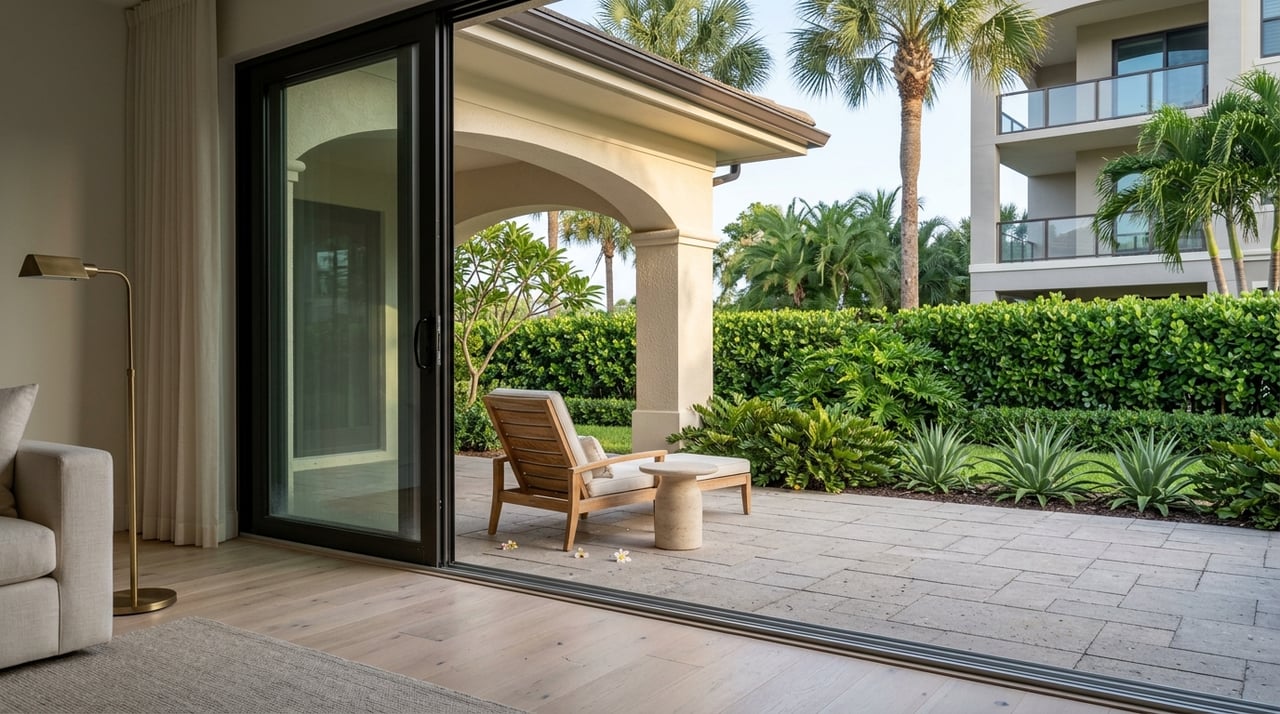
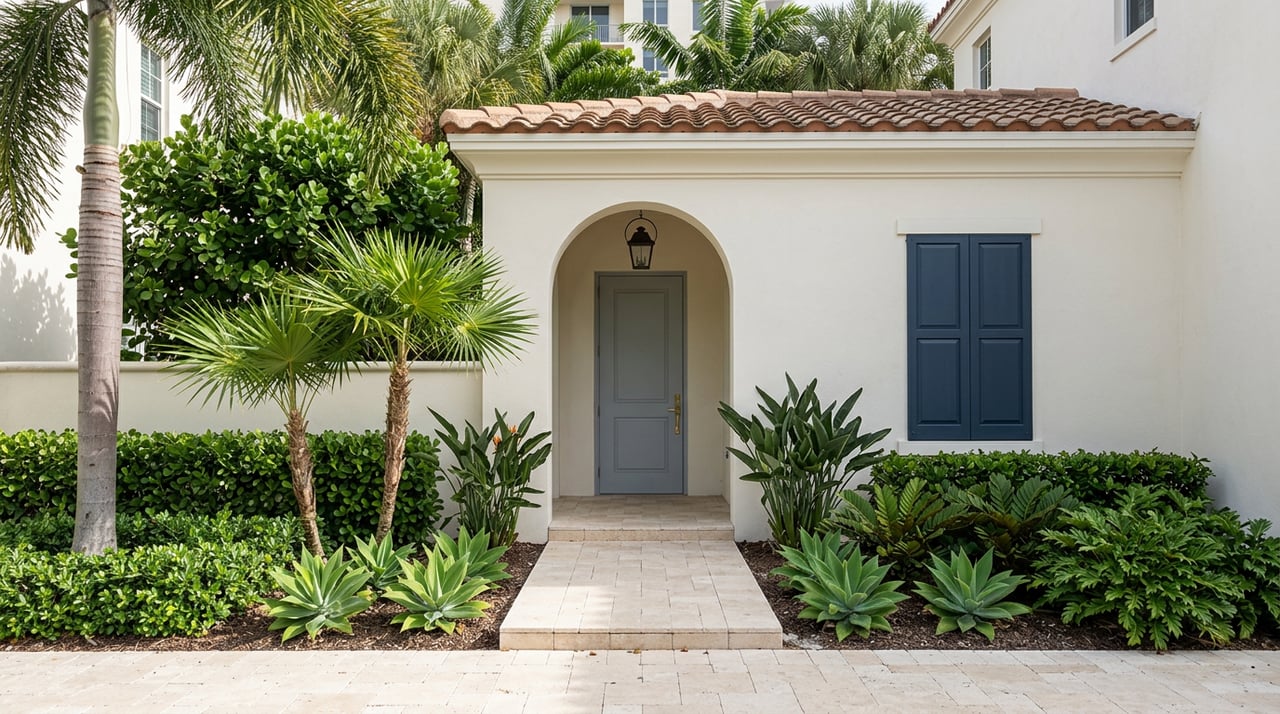
Villas and coach homes in Pelican Bay offer a more house-like feel with the convenience of managed exteriors. Many have direct-entry garages, screened lanais, and small patios that let you enjoy outdoor space without a large yard to maintain. Density is lower than in towers, and neighborhood pools or small clubhouses are common.
Access and convenience
A number of villa enclaves sit near the fitness and racquets centers or within an easy walk or short ride to tram stations. That setup appeals if you want a residential streetscape and a bit of private outdoor space, yet still value quick access to beach amenities and community programming.
Ownership and fees
Villa and coach home communities are usually run by homeowners associations that handle landscape care, exterior painting and roofing cycles for shared structures, and common-area maintenance. Owners are responsible for interior systems and finishes.
Florida homeowners associations operate under Chapter 720 of the Florida Statutes. That framework outlines records access, assessments, and rule enforcement. If leasing, pets, or guest policies matter to you, request the governing documents and budget early. You can review the statute that governs HOAs in Chapter 720 of the Florida Statutes. Rules and lease minimums vary by community, so confirming them in writing is essential.
Single-family pockets: privacy and independence
Lifestyle and feel
Single-family areas in Pelican Bay deliver detached living with private yards, driveways, and often private pools. Homes sit on individual lots, and the feel is quieter with more separation from neighbors. If you want room to entertain, host guests, and enjoy a private outdoor setting, these pockets are the most flexible.
Access and convenience
Some streets back to parks, fairways, or are steps from tram stops, while others may be a short drive to beach access. Most single-family owners enjoy the same Pelican Bay Foundation amenities as the rest of the community, though certain adjacent or private enclaves can have separate associations or membership structures. Always verify how amenity access works for the specific property and whether a community-level transfer or closing fee applies.
Ownership and upkeep
With a detached home, you have more control and more responsibility. Expect to manage your own roof replacement timeline, exterior paint, pool service, landscaping, irrigation, and hazard insurance. HOA fees, if present, tend to be lower than tower condo dues, but the out-of-pocket and contractor coordination are on you.
Because Pelican Bay is coastal, it is smart to confirm the property’s flood zone and whether flood insurance is recommended or required by your lender. Start with the FEMA Flood Map Service Center to view parcel-level mapping and base flood elevations, then review insurance and mitigation features like impact glass or shutters.
Which enclave fits your goals
If you want true lock-and-leave simplicity
- Consider high-rise towers or managed villa enclaves.
- Look for buildings with concierge, on-site management, and strong reserves.
- Verify service contracts for HVAC and the scope of association maintenance.
If you want outdoor living and space for guests
- Focus on single-family pockets where you can add or enjoy a private pool and larger patios.
- Budget for ongoing maintenance such as landscaping and pool care.
- Check proximity to tram stops if daily beach access is part of your routine.
If seasonal renting is part of your plan
- Review leasing policies for the specific building or HOA well before you write an offer.
- Confirm minimum lease lengths, number of leases allowed per year, and any application timelines.
- Ask for the association’s enforcement history to understand how rules are applied.
If step-free living matters
- Towers commonly offer elevator-served, single-level layouts with minimal steps.
- Many villas provide one-level living, though some have a few steps at entry or garage.
- In single-family homes, confirm threshold heights and bathroom layouts for easy access.
What to verify before you buy
Association structure and documents shape your daily experience and your budget. Request these items early, either before making an offer or as a firm contingency:
- Declaration, bylaws, articles, and rules and regulations. Confirm use rights, guest, pet, and leasing policies.
- Current budget and the last year of financials. This reveals reserve funding and operating versus capital spending.
- A recent reserve study and the last 6 to 12 months of board meeting minutes. Look for plans involving roofs, façades, elevators, or seawall and exterior projects.
- Current insurance certificates. For condos, note master policy coverage and deductibles that can affect owner HO-6 policies. For single-family, review required coverages.
- A written summary of any special assessments, litigation, or structural projects in progress.
- An estoppel or resale certificate showing fees owed, transfer fees, and assessment balances.
Florida law provides owners with rights to certain official records and budget disclosures for condominiums under Chapter 718 and for homeowners associations under Chapter 720. For flood risk and insurance questions, start your due diligence with the FEMA Flood Map Service Center.
Eight smart questions to ask early
- Is the property governed as a condominium under Chapter 718 or a homeowners association under Chapter 720, and can you provide the recorded declaration and bylaws?
- What do the estoppel or resale certificates show regarding outstanding balances, special assessments, or pending projects?
- May I review the last three years of financials and the current reserve study, including line items for major repairs and replacements?
- What does the building or community insurance cover, what are the deductibles, and what must I carry personally as an owner?
- What are the leasing and pet rules, including minimum lease terms, frequency limits, and any approval steps or fees?
- Does the property have impact-rated windows or shutters, and are any hurricane-related exterior upgrades planned or funded?
- Are there Pelican Bay Foundation transfer or closing fees tied to ownership changes, and what are the current amounts and due dates?
- Which tram station serves the community, and how far is it by walk or short ride to the beach boardwalks and the Marker 36 and Sandbar restaurants?
How Maureen helps you compare options
Choosing among towers, villas, and single-family pockets is easier with a clear, side-by-side view of lifestyle, access, and ownership costs. With deep neighborhood familiarity across central Naples and a boutique, high-touch approach, you get guidance that aligns with how you want to live, seasonally or full time. From document reviews and vendor introductions to pricing, negotiation, and a smooth closing, you have an advisor focused on fit as well as value.
If you are weighing Pelican Bay’s enclaves or want a curated shortlist, reach out to Maureen Sexson to start the conversation.
FAQs
What amenities do Pelican Bay owners typically access?
- Most owners enjoy private beach access with staffed beach clubs and beachfront restaurants, a community fitness and wellness center, an active racquets program, tram and boardwalk access, and miles of trails, as referenced on the Pelican Bay Property Owners Association resource.
How do Florida condo and HOA rules differ for owners in Pelican Bay?
- Condominiums are governed by Chapter 718 of the Florida Statutes and HOAs by Chapter 720, which define records access, assessments, insurance responsibilities, and rule enforcement for each structure.
Are tower condo fees higher than villa or single-family fees in Pelican Bay?
- Tower condo dues are typically higher because they fund exterior systems, common-area insurance, elevators, and amenities; villa HOAs fund shared exteriors and landscaping, while single-family owners handle most items directly.
Do all Pelican Bay neighborhoods have the same leasing rules?
- No. Each association sets its own leasing terms, caps, and application procedures, so always request the current rules and confirm them in writing before you buy.
How do I check flood risk for a Pelican Bay property?
- Start by reviewing the parcel’s flood zone and base flood elevation on the FEMA Flood Map Service Center, then speak with your insurance professional about coverage and mitigation features.